 Thought Leadership
Daniel Harbourne
When Politics Silences Analysis: Why Disowning Analyst Research Is a Dangerous Game
Financial markets are built on a fragile but essential foundation: trust in information. Investors, policymakers and institutions rely on research not because it is always comfortable or reassuring, but because it helps map risks before they crystallise into crises. When analyst notes are dismissed or disowned for political reasons, that foundation begins to crack. A recent episode involving Deutsche Bank, the US Treasury Secretary Scott Bessent and a sober assessment of global capital flows illustrates why this practice is so perilous.
A Brief Recap of the Episode
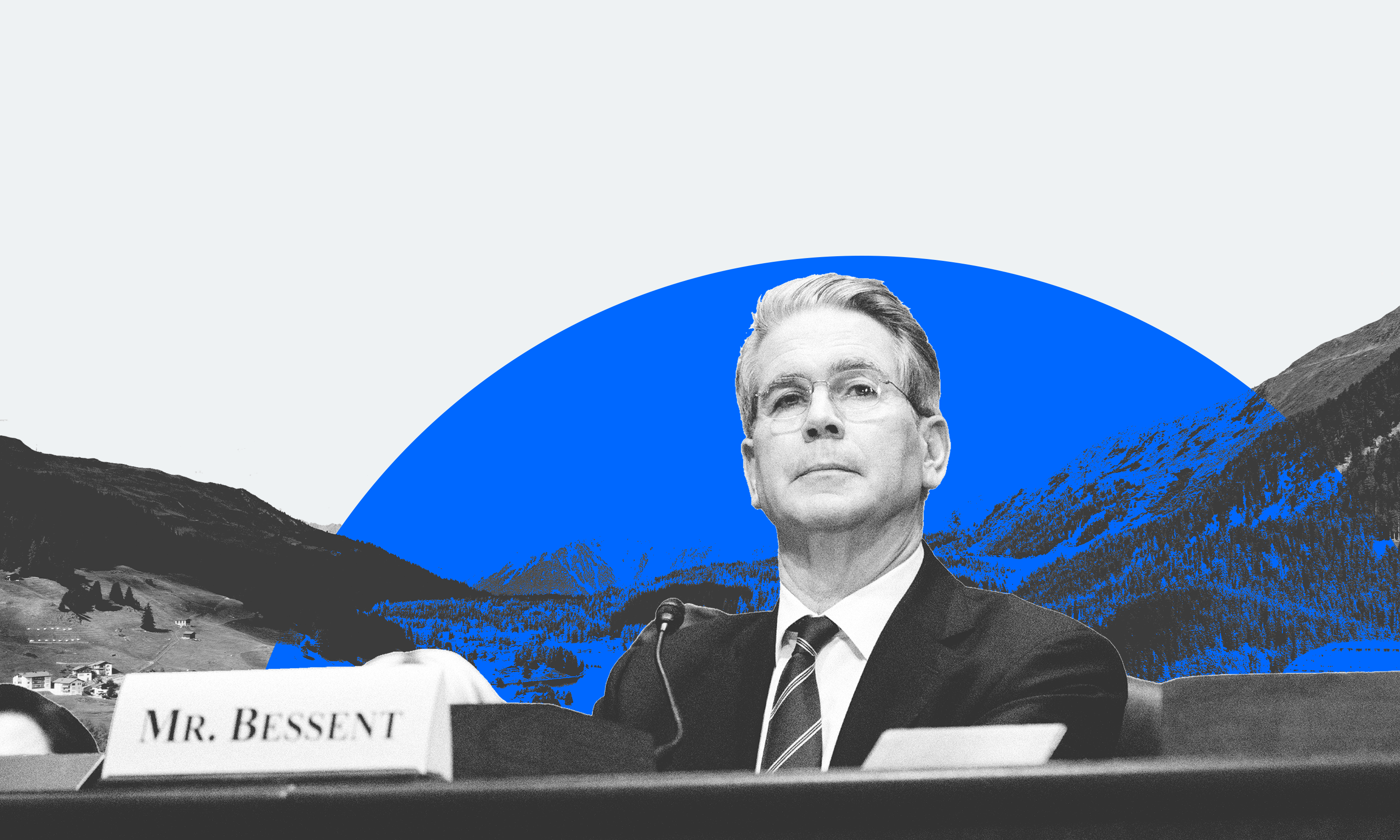
At the World Economic Forum, US Treasury secretary Scott Bessent publicly downplayed concerns raised in a Deutsche Bank research note. The note, written by the bank’s chief foreign exchange strategist George Saravelos, suggested that European investors might reduce exposure to US assets if trade threats and geopolitical tensions continued to escalate.
Bessent told attendees that the idea came from “a single analyst” and that Christian Sewing, Deutsche Bank’s chief executive, had personally called to say the bank did not stand by the analysis. The implication was clear: the research should not be taken seriously.
On the surface, this might appear to be a routine attempt to reassure markets and a key political stakeholder in the US Treasury. In reality, it raises uncomfortable questions about the boundary between independent analysis and the management of political narratives.
What the Analyst Actually Said
The Saravelos note did not predict an imminent exodus of European capital from the US. Instead, it laid out a structural fact and a conditional risk. Europe, the report noted, holds roughly $8 trillion in US bonds and equities, making it America’s largest external creditor. This level of exposure highlights how dependent the US is on foreign capital to finance large and persistent fiscal deficits.
The analysis then explored how rising geopolitical strains, trade disputes, or financial fragmentation could at the margin encourage European investors to diversify away from dollar-denominated assets. This is not radical thinking. Currency strategists routinely assess how political risk, sanctions, or trade barriers can influence capital allocation over time. In short, the note did what good research is meant to do: identify vulnerabilities and outline plausible scenarios.
The Politicisation of Market Risk
Publicly disowning such analysis for political reasons introduces several systemic dangers.
First, it undermines research independence. Large financial institutions employ analysts precisely to produce views that may be uncomfortable, contrarian, or inconvenient, once grounded in real information. If analysts perceive that politically sensitive conclusions will be repudiated by senior management, incentives shift. Research becomes cautious, self-censored and aligned with official narratives rather than objective risk assessment.
Second, it creates a false sense of security. Markets are forward-looking mechanisms. They price not only current conditions but expectations about future policy, growth and stability. When policymakers dismiss potential risks instead of engaging with them, they reduce the likelihood that institutions will prepare contingency plans. History shows that crises are often amplified not by the shock itself, but by the absence of preparation.
Third, it erodes credibility. When a bank’s leadership publicly distances itself from its own research, investors are left wondering which voice to trust. Is the research desk independent, or is it subordinate to political considerations? Over time, this ambiguity diminishes the value of all future analysis produced by the institution.
Analysis Is Not Advocacy
One of the most troubling aspects of this episode is the apparent conflation of analysis with advocacy. Highlighting a risk does not mean endorsing it. An analyst who warns that trade tensions could lead to reduced dollar exposure is not urging investors to sell US assets; they are outlining how rational actors might respond to changing incentives.
Healthy financial systems depend on this distinction. Analysts stress-test assumptions. Policymakers decide how to respond. When the two roles blur, policy becomes reactive and research becomes performative.
There is no shortage of historical examples where inconvenient analysis was ignored, with disastrous results. Before the global financial crisis, warnings about leverage, housing bubbles and opaque derivatives were often dismissed as overly pessimistic. In the eurozone crisis, early concerns about sovereign debt sustainability were politically unpalatable until markets forced the issue. In each case, the problem was not a lack of analysis, but a lack of willingness to engage with it honestly.
A More Constructive Approach
A healthier response would have been to contextualise the analysis rather than disown it. Policymakers could have acknowledged Europe’s large holdings of US assets while emphasising the depth, liquidity, and institutional strength of US markets. They could have argued that diversification pressures are manageable, or that current policies aim to reinforce investor confidence.
Listening as a Strategic Advantage
The episode involving Deutsche Bank and the US Treasury is about more than a single analyst note. It reflects a broader tension between political messaging and market reality. In an era of geopolitical fragmentation, trade disputes, and record debt levels, uncomfortable analysis is a strategic asset.
Silencing or sidelining analysts for political convenience may buy short-term reassurance, but it carries long-term costs. Markets have a way of rediscovering suppressed risks, often abruptly and at great expense.
The real danger is not that analysts warn of scenarios that may never materialise. It is that, when those scenarios begin to form, decision-makers have trained themselves not to listen.